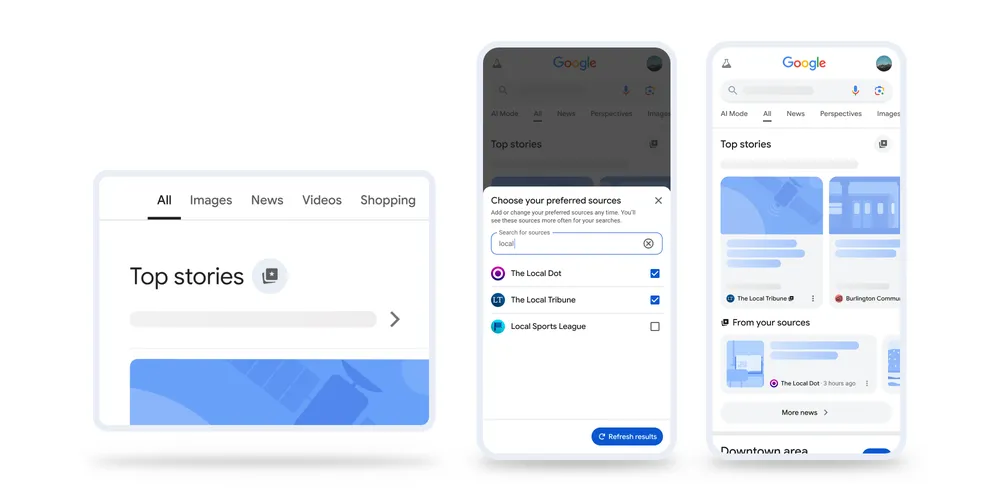
Google has announced the global rollout of the "Preferred Sources" feature, now available in all supported languages. This marks a tangible evolution in how users consume news through Google Search and serves as a strong signal for content publishers.
Highlights:
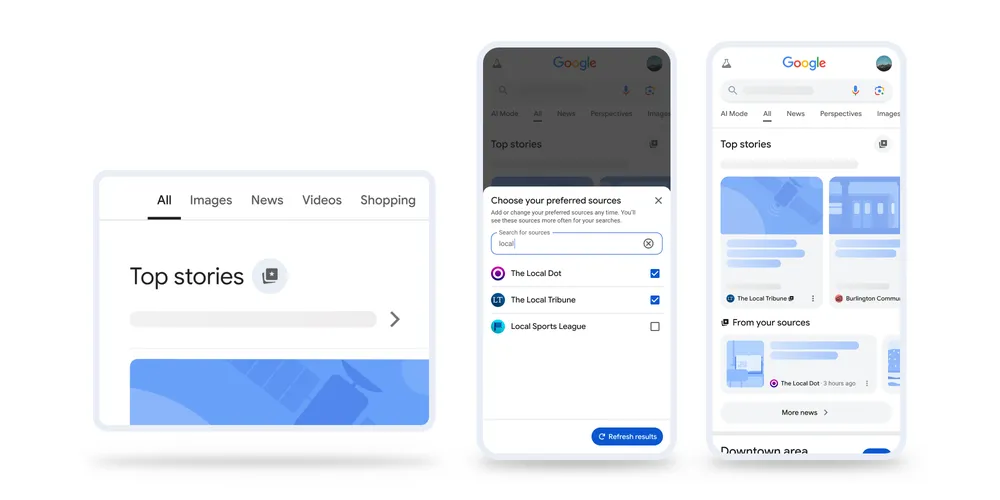
- Users can now select which sites will appear primarily in the "Top Stories" section of search results.
- Readers who mark a site as a preferred source are twice as likely to click on that site.
- Over 200,000 unique sites have been selected by users, covering a wide range from local niche blogs to large international publications.
- Special tools to help publishers encourage their readers to add them to the list are available in the Google Help Center.
How the Feature Works
The principle is simple: users find the star icon next to the "Top Stories" section in Google search results and by clicking on it, they gain access to an interface where they can add the news sites they want to see primarily.
This feature was tested in the US and India before being rolled out globally. Its global distribution in all languages marks an important milestone in personalizing the search experience on Google.
Implications for Publishers
The numbers shared by Google speak for themselves: users who add a site to their preferred sources click on that site twice as much. This is a direct loyalty tool that partially transcends traditional algorithmic logic by allowing users to make an explicit choice.
The diversity of sources with over 200,000 selected sites is remarkable. This tool is not restricted to large media organizations or corporate sites; it encompasses a wide range from local blogs to international publications.
For SEO and audience specialists, this is about actively encouraging their readers to engage in this process. Google provides special resources that include tools and recommendations for publishers to guide their readers regarding this option.








































Comments
(4 Comments)