
Since the end of March 2026, many SEO experts have started observing abnormal data in position tracking tools: a significant and unexplained increase in visibility for queries related to YouTube, TikTok, Instagram, or Dailymotion, where these platforms were not objectively ranked. Some analysts, misled by these figures, believed in an unprecedented algorithm earthquake. The truth is harsher: Google was not showing them the real results.
Google's "Soup": Misleading Results Feeding SEO Tools
The mechanism is now documented. When Google detects an automated behavior (high query volume, suspicious user agent, lack of JavaScript execution, well-known scraping patterns), it degrades or distorts the results; this presents outcomes where YouTube or Dailymotion videos are over-represented, even in queries where these platforms should not dominate.
This is not a mistake. This is a deliberate decision: Instead of directly blocking bots, Google provides them with false information. At Monitorank, this soup was detected, documented, and corrected.
February 2026: Monitorank Detected and Corrected Within Hours
On February 3, 2026, at 6 AM, a significant drop was observed in the graphs of the Monitorank account. Technical teams immediately addressed the issue. A diagnosis was quickly made: Google was sending a heavy volume of YouTube and Dailymotion results to the identified bots, especially on the 2nd and 3rd pages of the SERPs.
Fabien Barry noted on platform X that morning: "The 2nd and 3rd pages are returning many YouTube and Dailymotion results. Perhaps a change for Google: When it detects a bot, instead of blacklisting it, it provides unreliable data (like Bing)."
There was a Google update tonight. Nothing is certain, I need to continue my tests.
— Fabien (@barryfabien) February 3, 2026
The 2nd and 3rd pages are returning many YouTube and Dailymotion results.
Perhaps a change for Google, providing unreliable data instead of blacklisting when it detects a bot (like Bing).
A few hours later, the first correction was implemented. On the same day, the situation was brought under control! On February 4, Google took a step back. Was this a test?
March 2026: Google Strikes Back
On March 24, 2026, Google launched a Spam Update that was completed within a few hours. Then, on March 27, the Mountain View giant announced the March update, the first Core Update of the year, with a two-week rollout planned.
It was during this period of uncertainty that Google made a strong comeback. For Monitorank, it was a triggering technical situation: the Spam Update on March 24 blacklisted SEO bots en masse, prompting the urgent establishment of a backup infrastructure. Coincidentally, this infrastructure did not include the fix implemented in February. The next morning, on March 25, 2026, the graphs began to drop again. Incorrect results returned: YouTube, Dailymotion, but also Facebook, TikTok, and Instagram. Approximately 25% of users' positions in the tool were temporarily incorrect. The correction was applied during the day, and the affected keywords were restarted.
Google is trapping bots by providing SERPs filled with incorrect results.
— Fabien (@barryfabien) March 27, 2026
We were the first to notice the situation, and a correction was implemented.
Google struck back this week, everything is under control for @monitorank and @semscraper 😎 https://t.co/esR8PAJXIl
Chaos in the Industry: A Historic Core Update... or Incorrect Data?
Here, the situation becomes interesting yet equally concerning, especially for the SEO ecosystem.
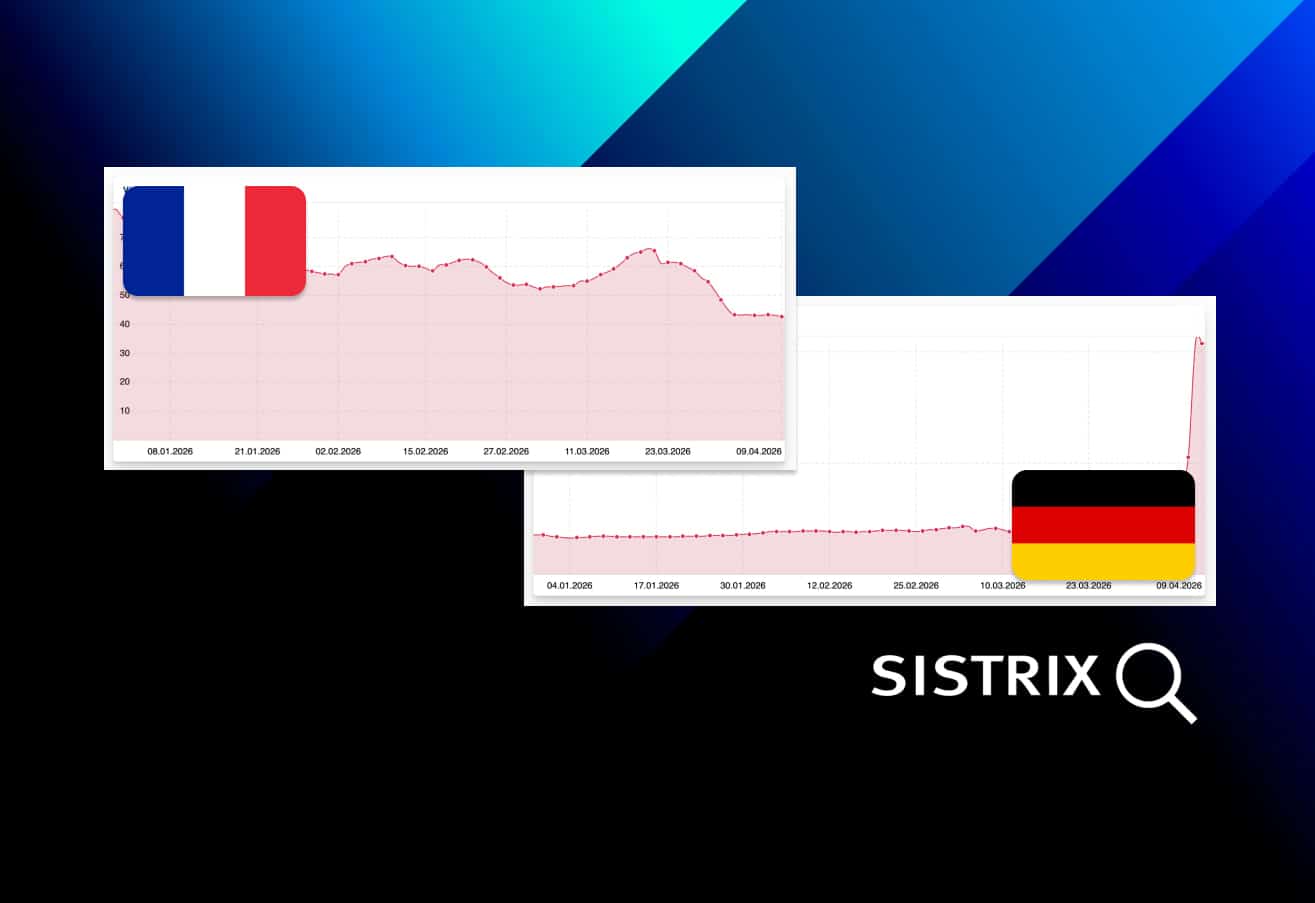
In March 2026, position tracking SEO panels are going crazy. Semrush Sensor reaches a value close to 9.5/10, one of the highest recorded "Google earthquake" levels. Competitors of Monitorank present data indicating that YouTube, TikTok, and to a lesser extent Facebook and Instagram, have experienced an unprecedented increase in visibility across all themes and global markets.
On April 1, some industry experts mention an explosion in YouTube's visibility in search results. However, these figures are actually a reflection of the distorted SERPs presented to bots by Google, not real results. In short, the situation interpreted by some as an unprecedented algorithm earthquake at that moment was, at least partially, a "measurement artifact".
Google's Anti-Scraping Attack: A Long-Term Strategy
This section is not in vain. It is part of Google's increasingly aggressive anti-scraping campaign over the past year.
- In January 2025, Google launched the bot protection system SearchGuard applied to search results. Almost every SERP scraper, especially those ignoring or mis-executing JavaScript, experiences an immediate disruption.
- In September 2025, Google removed the num=100 parameter used to get 100 results in a single query, forcing scrapers to increase their calls tenfold and significantly raising their operational costs.
- In December 2025, Google sued SerpApi, claiming it was attempting to bypass SearchGuard on a scale of hundreds of millions of queries daily. The legal argument is based not only on terms of use but also on DMCA. This potentially opens the door to astronomical compensation claims.
Google's goal leaves no room for debate: to make scraping technically more costly, legally riskier, and unreliable by distorting the data presented to detected bots.
What Does This Mean for Your SEO Data?
The takeaway from this section is concrete: Not all position tracking tools are equal against these attacks.
A tool that does not detect it is receiving false information will provide you with incorrect data and present it as real, especially if the team behind it is not quick enough to notice and correct the issue. This was exactly the case for many major tools in March 2026.
During "shadow SERP" periods (result pages differing from the official version), it is recommended not to blindly trust third-party tools and to compare the data with Google Search Console; this remains an unbiased first-party source.
At Monitorank, the mechanism was detected early in February, allowing for the implementation of the correction and ensuring operational maintenance, even under the pressure of mass blacklisting at the end of March. Semscraper, sharing the same technical infrastructure, benefited from the same protections.






















Comments
(5 Comments)