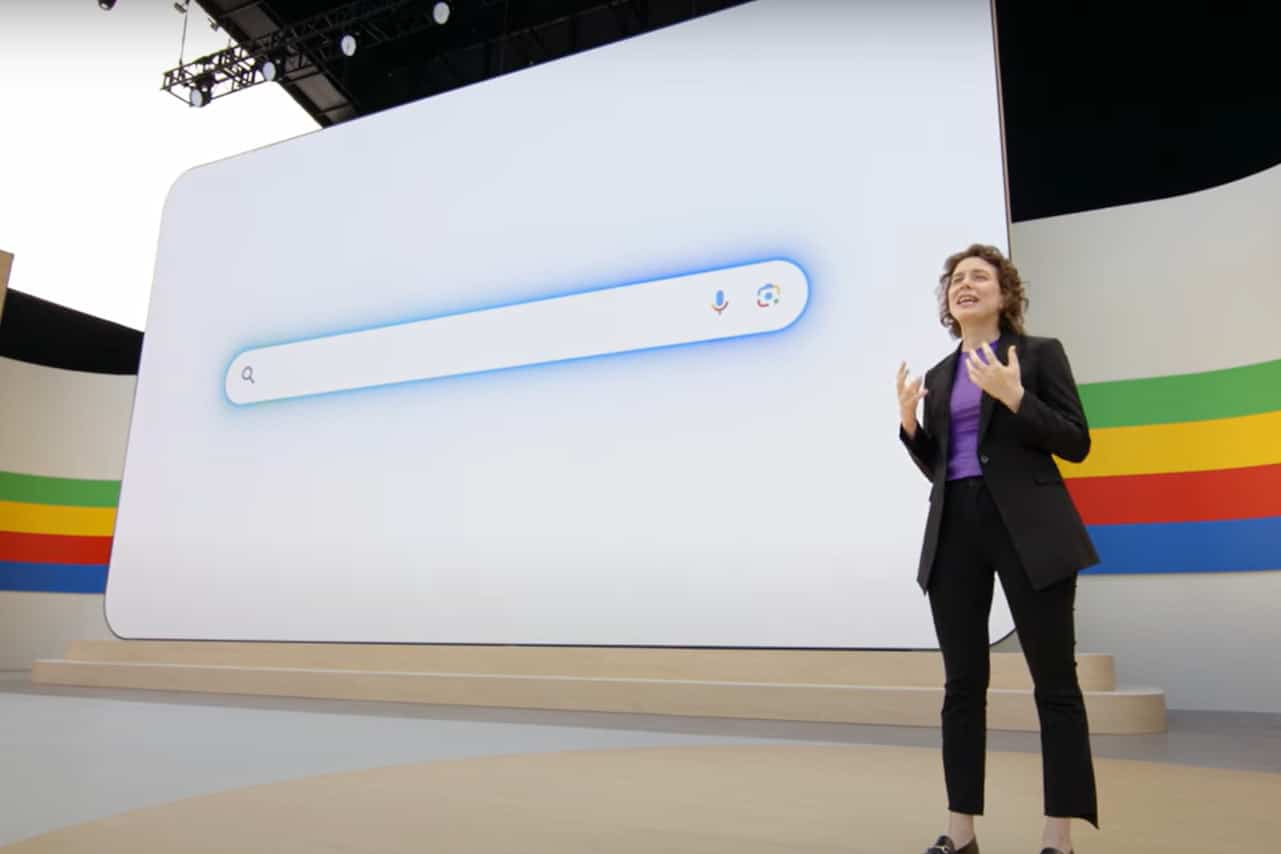
Liz Reid, who recently addressed the future of Google Search, reveals how artificial intelligence is redefining the usage, queries, and business model of the search engine. There is no sharp break, but a deep and accepted evolution.
Highlights:
- AI General Views do not eliminate clicks to websites, but rather eliminate "bounce clicks"; these are quick visits made to obtain a single piece of information on a page.
- Queries are becoming longer and more natural: users are defining their real problems instead of converting them into keywords.
- Low-quality content (slop) existed even before artificial intelligence. AI has only industrialized this, and Google claims to have experience in combating it.
- Google Search, AI Mode, and Gemini will not necessarily merge; they respond to different uses, and users switch from one to another based on their needs.
AI is not killing clicks, it is ranking
One of the most debated topics in the SEO world is whether AI General Views' summaries created on these page tops will steal traffic from publishers. Liz Reid, the vice president responsible for Google Search, provides a nuanced answer to this question in a recent interview.
According to Reid, AI General Views essentially reduce "bounce clicks": a user clicks on a link and immediately returns to Google after checking a number or date because that was all the information they needed. These types of clicks are disappearing, and this is accepted.
On the other hand, if a user wants to read an article for five minutes, that intent remains. AI General View can help identify the right page faster, thus reducing bad clicks, not good ones.
The message is this: artificial intelligence is not changing the web, it is working alongside it. "People want AI on the web, together," summarizes Reid.
The nature of queries is changing
One of the most interesting signals mentioned by Liz Reid is the evolution of the queries themselves. Since the rollout of AI General Views, Google has observed queries that are "significantly longer" and formulated in more natural language.
This change is not insignificant. For years, users learned to "speak Google's language": removing unnecessary words and condensing their questions into a few effective keywords. This reflex is gradually fading.
Now users are defining their real problems in their own words and expecting Google to do the translation work. This reversal is fundamental: the machine needs to adapt to the human, not the other way around.
Liz Reid believes this is a return to the essence of Google's mission: "to organize the world's information and make it universally accessible and useful". With artificial intelligence, the emphasis shifts from accessibility to usefulness.
AI General Views, AI Mode, Gemini: three tools, three uses
Google is not trying to centralize everything in a single product. Reid emphasizes the complementarity of different tools and that many users switch from one to another based on their needs.
The distinction shapes up as follows:
- Google Search and AI Mode are more focused on information-seeking queries; these refer to situations where the user is trying to understand something or connect to a web resource.
- AI Mode manifests itself with longer, more complex, and conversational-style queries. It serves as an entry point for questions that require deeper processing.
- Gemini, on the other hand, is more about efficiency, creativity, and writing. When there is a creative task, users naturally turn to Gemini.
When asked whether Search and Gemini will eventually merge, Reid cannot provide a definitive answer. Both share the same underlying models and are working on development together, but a complete merger is not certain.
The competitive model remains strong, but is evolving
Another concern regularly expressed is: if artificial intelligence answers questions directly, how does Google continue to make money? Reid partially refutes this notion.
- Firstly, ads are displayed in less than a quarter of queries. Many searches, including those without a commercial dimension, have never been monetized.
- Secondly, for queries that require action, clicking is still necessary. Knowing the best shoe model is not enough: the user still needs to go to a site to make a purchase. The artificial intelligence provides an answer, but does not place an order.
- Thirdly, more detailed and specific queries theoretically provide the opportunity to create more targeted and relevant ads. The clearer the user expresses their need, the higher the likelihood of matching with an appropriate ad.
"Slop": an old problem, a new scale
The term "AI slop" refers to low-quality content that is mass-produced by artificial intelligence tools to fill search results. This is a hot topic in the industry, and Liz Reid does not ignore it.
However, she addresses it in historical context: slop is not an invention of artificial intelligence production. It existed before, produced by humans, through content farms and spam techniques. Artificial intelligence has simply made it scalable; that is, it has become reproducible on a large scale without additional effort.
Google claims to have gained solid experience in combating such content. The goal is not to eliminate slop but to keep the spam rate very low in the results presented to users.
Reid also emphasizes the responsibility of publishers: producing quality content is the best strategy as users increasingly turn to more authentic sources, whether produced by communities, audio, or video.
Personalization, the next frontier
A field that is still underdeveloped but has been mentioned several times by Reid is personalization. Google Personal Intelligence represents the first step towards results tailored to each user's individual preferences.
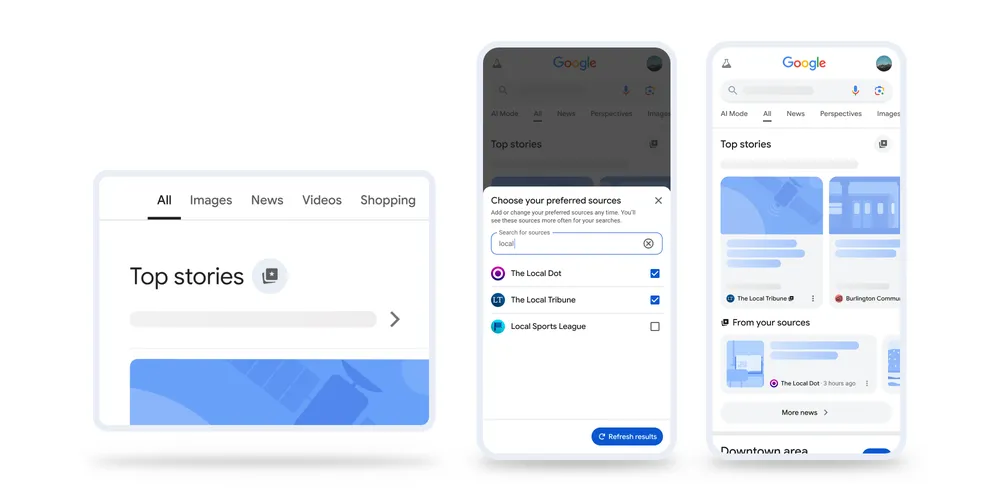
This goes beyond simple recommendations based on the past. It includes the ability to specify the user's trusted sources, indicate their favorite sites, and obtain results considering their current subscriptions. If a user has subscribed to a media outlet, Google should be able to prioritize content accessible from that media outlet.
This is an area that raises many opportunities and questions related to the information bubble, but Reid sees it as a strong direction for the coming years.






























Comments
(3 Comments)