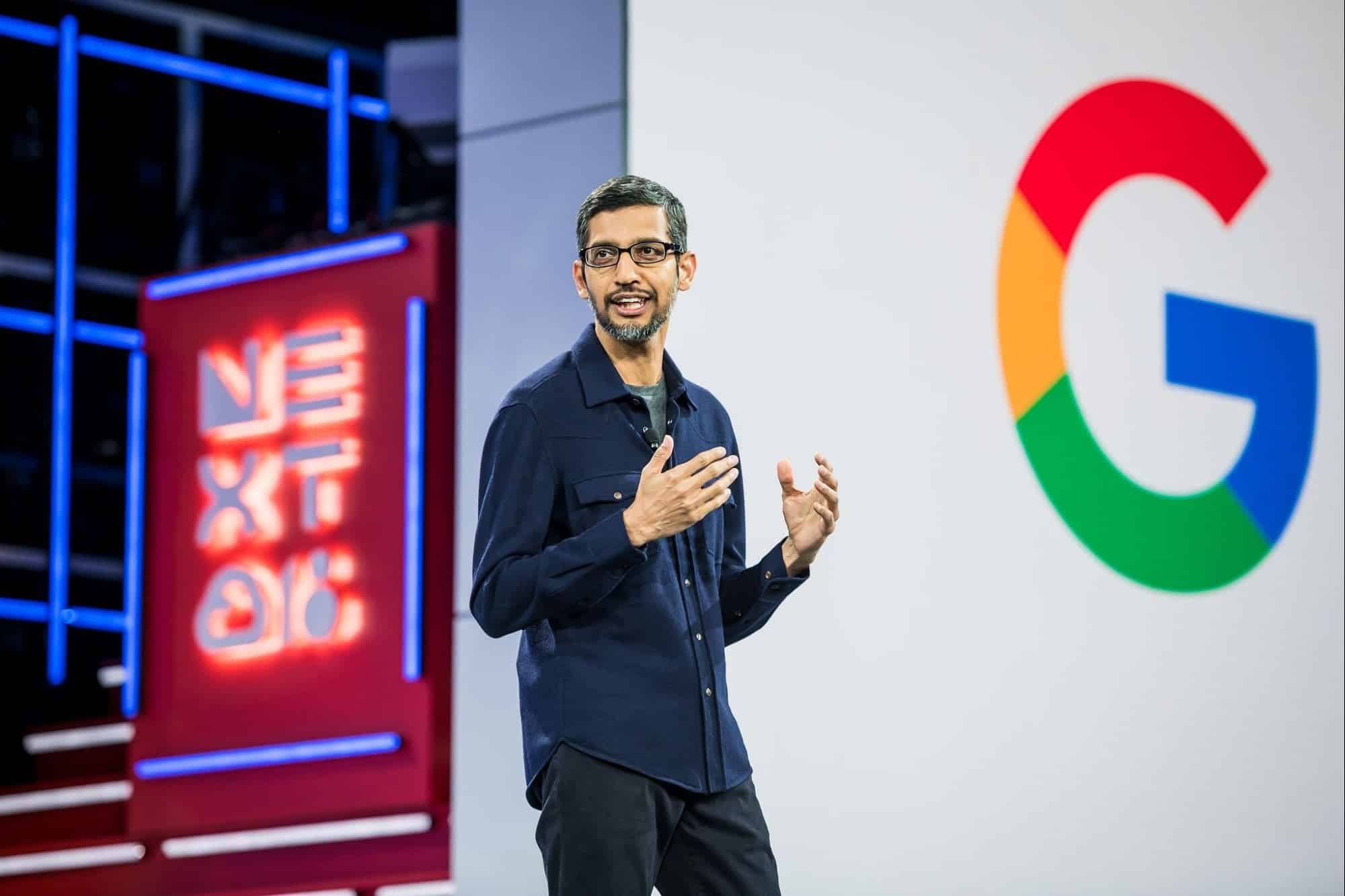
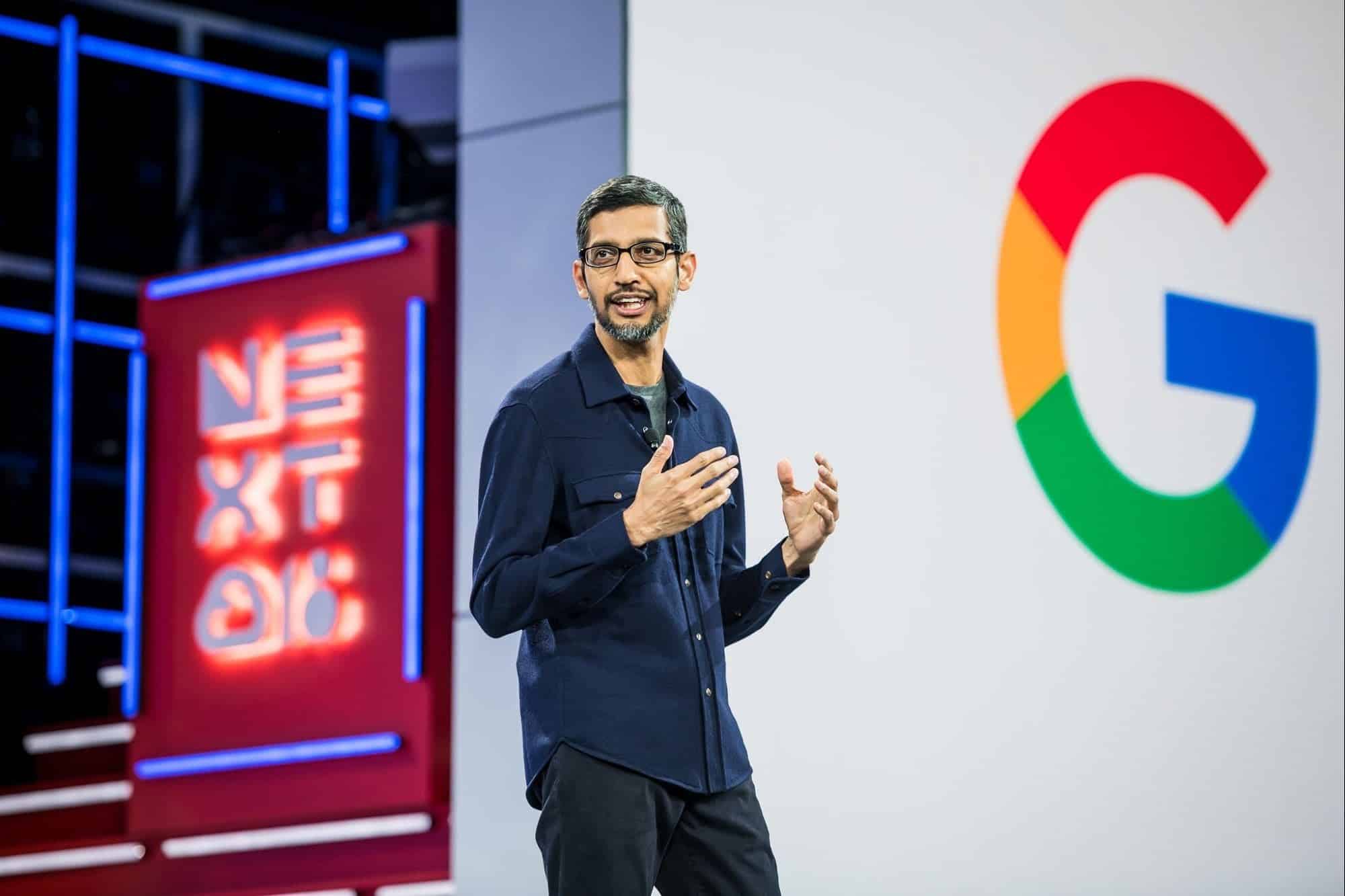
In a lengthy interview with the CEO of Stripe, Sundar Pichai moved beyond an abstract vision. He set a timeline, outlined technical barriers, and explained how he uses these tools internally. Here’s what web professionals need to know about this.
Highlights:
- Sundar Pichai now describes Google Search as an "agent manager" that can complete tasks rather than just spinning links.
- 2027 is marked as a critical year for agency workflows outside of engineering.
- Physical constraints (memory, data centers, supply chain) hinder distribution, despite the 2026 budget being between $175 and $185 billion.
- The issue for SEO experts is changing: it's no longer just about ranking, but being beneficial to a system that completes a task.
Search as an Agent Manager
Sundar Pichai had previously spoken about the evolution of Google Search. However, this time the language has definitely changed.
In December 2024, he promised that search would "deeply change in 2025." In October 2025, during Google's quarterly results, he announced that queries made in AI mode had doubled quarter-over-quarter, using the phrase "the moment of expansion for Search." In February 2026, he attributed the growth in Search revenues (which reached $63 billion in Q4 2025, accelerating at an annual rate of between 10% and 17%) to AI features.
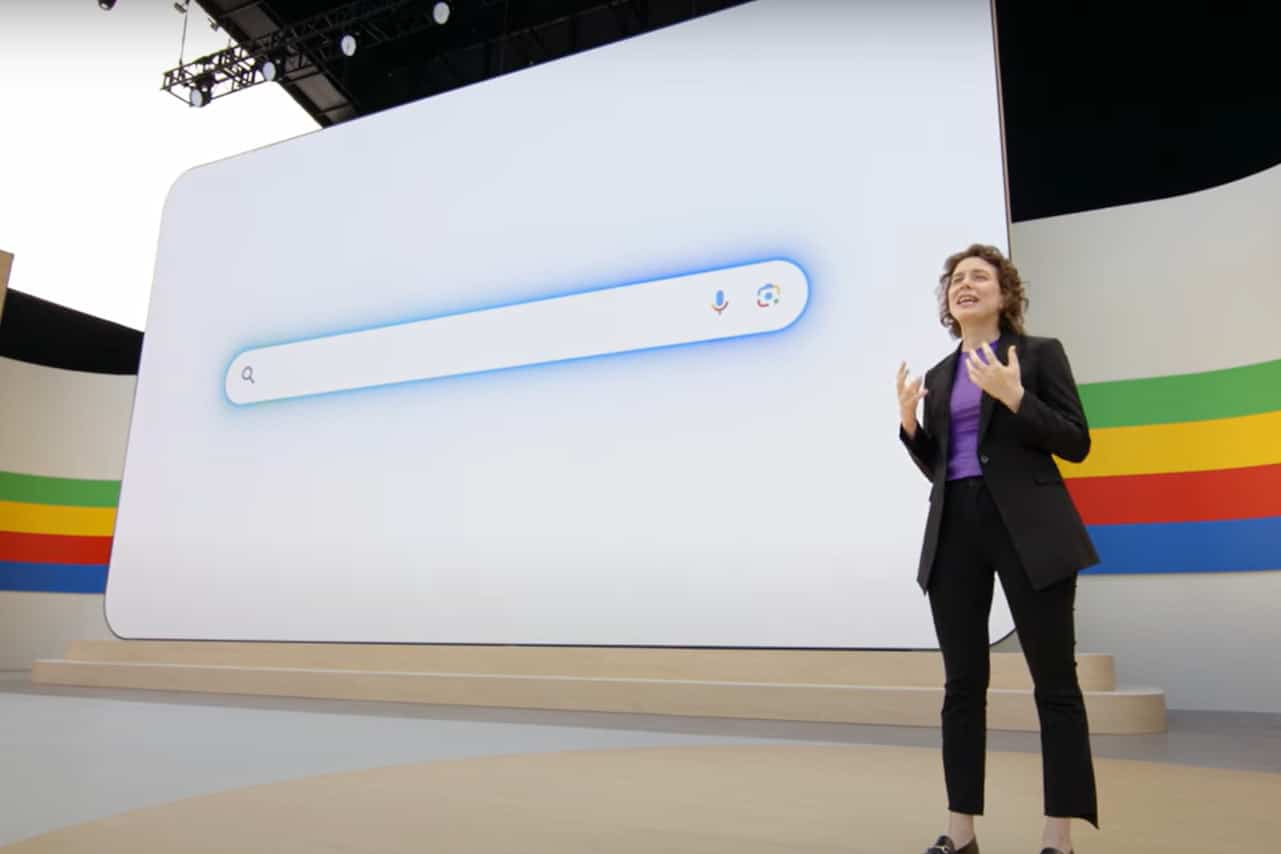
In April 2026, Sundar Pichai put a definitive label on the project: Search as an "agent manager," a tool where users "complete tasks with multiple execution threads."
In summary, each of these discussions transitioned from the abstract to the concrete, from prediction to recognition. This semantic shift is not insignificant: it indicates that the product vision is now clear enough to be named.
2027: A Milestone Set by Pichai Himself
When asked by Patrick Collison when a fully agency-based business process would be realized at Google, Pichai pointed to 2027.
He noted that non-technical workflows, meaning processes outside of engineering, would undergo "quite deep" transformations by that year. Some teams within Google are already working this way. The mission for 2026 is to spread these applications to as many groups as possible.
He also acknowledged that young "AI-native" companies have a structural advantage in adopting these new workflows. This allows organizations like Google to avoid the burden of training and change management.
This timeline serves as an operational data point for SEO and marketing teams: this is not a distant transformation, but a transition that needs to be prepared for now.
“Intelligence Overflow”: The Gap Between Capacity and Actual Use
One of the most enlightening conversations in the interview came not from Pichai but from Collison. The CEO of Stripe described a situation he called "intelligence overflow": the gap between what AI can do today and what organizations are actually doing.
He identifies four barriers to adoption:
- The first is the ability to guide. Achieving good results requires practice, and most employees have not yet developed this skill.
- The second is the context unique to each organization: even a good guide must know which internal tools, datasets, and rules to use.
- The third is access to data: an agent cannot answer the question "where is this file?" if it does not have access to the CRM.
- The fourth is the definition of roles: job descriptions, team structures, and approval workflows are designed in a world where AI counterparts do not exist.
Pichai confirmed this diagnosis and acknowledged that Google faces the same issues internally. He specifically noted that access controls for identities are a challenging issue that limits internal dissemination.
For SEO teams and agencies, this overflow concept is valid on two levels: primarily within their own organizations, where AI tools can be utilized much more. Secondly, on the Google side, where models are already capable of conducting agency searches, but the product has not yet fully captured this capacity.
Antigravity: How Google's CEO Uses Agentic Search
Beyond principles, Pichai provided a concrete example of what agentic search produces in practice with an internal tool called Antigravity.
As CEO, he queries this tool to get quick feedback after every product launch. He asks for the five most criticized points and the five most appreciated points. This uses search as a task completion tool, not as a link-spinning engine.
The difference between this internal experience and what external users can access is exactly the gap Google is trying to close. This provides a concrete measure of the product's direction.
Constraints Hindering Distribution
Sundar Pichai confirmed that in 2026, Google's investment budget will be between $175 and $185 billion. This is about six times the amount Google spent before the rise of AI.
When asked about bottlenecks, he listed four constraints in order:
- Chip production capacity is the most fundamental limit.
- Memory supply is "definitely one of the most critical constraints today."
- Permitting and regulatory timelines for building new data centers are an increasing source of concern.
- Finally, some critical components outside of memory add additional pressure to the supply chain.
Still, Sundar Pichai noted that these constraints lead to efficiency gains: he predicts that Google will make its systems "30 times more efficient despite the increase in spending." He dedicates an hour each week to examine the allocation of computing capacity between teams and projects in detail.
Tangible Changes for SEO
The concept of the agent manager is changing the questions SEO professionals need to ask. In the search model based on results, the goal is ranking. In the agentic model, the goal is to be beneficial to a system that completes a task. This is two different issues.
A concrete example: a user asks to find a plumber from a search, check reviews, confirm availability for Saturday morning, and schedule an appointment. The agent does not spin links. It accesses structured data, review platforms, and booking systems to successfully complete the task. The selected businesses are those that have accurate, structured, and accessible information. Those with outdated hours, no booking integration, or few reviews do not stand out.
The same schematic applies to e-commerce: if a buyer asks for "running shoes under 150 euros, suitable for flat feet, that can be delivered on Friday," the agent needs product data, stock status, delivery estimates, and compatibility information. Sites that present this data in structured and machine-readable formats become resources the agent uses. Others are skipped.
The visibility question in an agentic world also arises: if an agent can synthesize an answer from five sources without directing the user to any of them, what is the value of being one of those sources? This entirely depends on whether the agent quotes you, provides a link, or uses your content as raw material without attribution.
Pichai's Claim Yet to be Proven
Pichai repeatedly states that AI search is not a zero-sum game: he mentioned the moment of expansion in October 2025; in February 2026, he noted that he saw no signs of cannibalization; in this interview, he compares the situation to YouTube, which has succeeded despite TikTok.
However, total query growth and individual site traffic are two different metrics. While Google can accurately state that more people are searching more often, publishers and e-commerce sites may receive less directed traffic from those searches. Both situations can be true at the same time.
Google has not published data on exit clicks post-AI Mode. Until these figures are available, Pichai's claim of expansion remains a statement, not a verifiable fact. Therefore, it is important for search professionals to independently track their own directed traffic trends rather than relying solely on Google's overall market commentary.
Open Questions Before 2027
How will Google monetize the tasks completed by agents? Will agents quote their sources or just use them? What does the concept of visibility mean in the agent manager model?
These questions remain unanswered. Companies that are currently structuring their data, APIs, and product information for machine consumption will be ready. Those that do not will be left behind in an already restructured environment.
Google I/O 2026, scheduled for May 19 and 20, should provide details on how these capabilities will be concretely distributed.



























Comments
(1 Comment)